Maharaja Prithu of Assam: The Warrior-King Who Shielded Kamarupa From Invasion
ANCIENT INDIAN HISTORYNORTHEAST INDIA HISTORY
S. K. Sinha
11/23/20255 min read
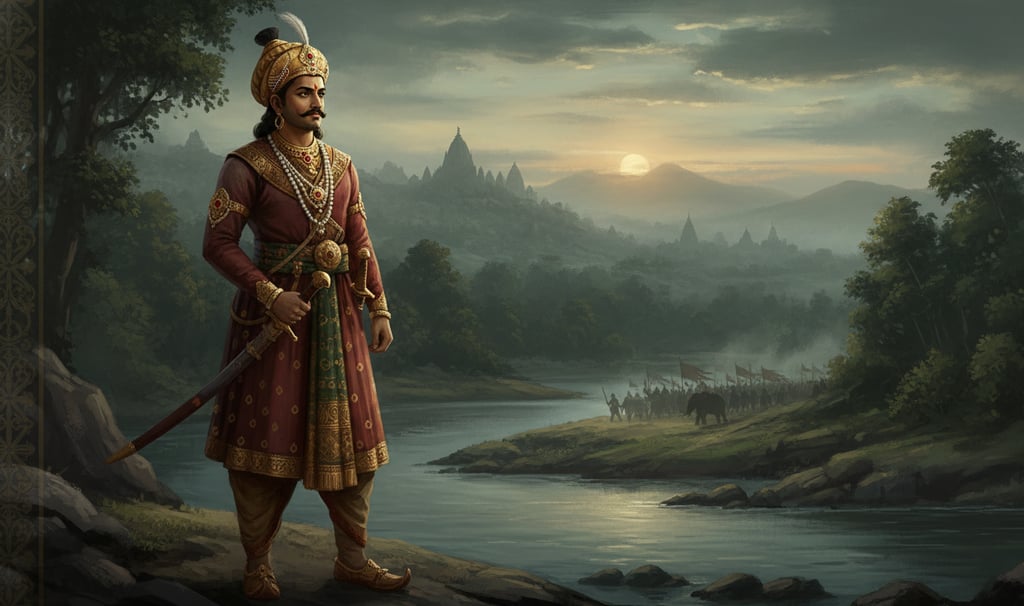
Assam’s long and layered history is full of kings, cultures, and kingdoms that shaped the Northeast. But among them stands a ruler whose courage is often forgotten in mainstream narratives, Maharaja Prithu of the Pala dynasty of Kamarupa.
His name may not be widely known today, but his decisions changed the fate of Assam at a time when much of north India was collapsing under foreign invasions. Prithu ruled during a moment of crisis, when the political landscape of India was undergoing dramatic change, and it was his leadership that ensured Kamarupa did not fall to the same fate as many other kingdoms.
Understanding Maharaja Prithu and the World He Ruled
Kamarupa, the ancient kingdom that Prithu inherited, was one of the oldest political states in the Northeast. Spreading across much of today’s Assam and surrounding regions, it had a long tradition of powerful rulers, temples, cultural centers, and thriving settlements along the Brahmaputra valley. By Prithu’s time, the kingdom was under the Kamarupa Palas, who were different from the Bengal Palas but equally influential in shaping their region.
The Political Climate Before Prithu’s Reign
When Prithu came to the throne, northern India was in turmoil. The once-strong kingdoms of Bihar and Bengal were falling one after another to the aggressive campaigns of the Ghurid Empire. The destruction of learning centers like Nalanda and Vikramshila and the rapid expansion of Ghurid control created a wave of fear and instability. Prithu’s Kamarupa was suddenly no longer distant from the chaos, it was directly in the path of one of the most ambitious invasions led by a general whose name inspired fear across the subcontinent: Bakhtiyar Khilji.
The Face-Off With Bakhtiyar Khilji: Assam’s Moment of Courage
This episode forms the heart of Prithu’s story. Bakhtiyar Khilji was known for his speed, ruthlessness, and ability to break kingdoms that appeared strong from the outside. He conquered Bengal swiftly and believed Assam would fall just as easily. But what he did not understand was the land he was stepping into, or the king who awaited him.
Khilji’s Invasion and Prithu’s Strategy
Historical texts like the Tabaqat-i-Nasiri describe how Khilji marched toward Assam with the same confidence he carried into earlier conquests. But the terrain, geography, and climate of Assam were unlike anything he had faced. Dense forests, unpredictable rivers, swamps, and heavy rains created natural barriers that exhausted his army long before the Assamese soldiers ever appeared in sight.
Prithu knew that facing the invader in open battle would risk unnecessary losses. Instead, he used the land as his greatest ally. Khilji’s men were pulled deeper into regions where food was scarce, diseases spread quickly, and movement became slow and painful. Once the invading army was weakened, the Assamese defenders struck with precision.
The result was devastating for Khilji: his soldiers died in large numbers, his horses perished, and he himself barely escaped the region alive. He soon died from illness and injuries suffered during the retreat. Prithu thus accomplished what very few rulers in North India had managed, he stopped a major Ghurid invasion.
Governance Under Prithu: Strengthening the Foundations of Kamarupa
Although Prithu’s victory against Bakhtiyar Khilji is the most dramatic part of his reign, his contribution to Assam goes beyond war. He ruled during a period when internal stability was just as important as external defence.
How Prithu Managed His Kingdom
Prithu worked to reorganize administrative posts and strengthen frontier regions so that future invasions could never catch Kamarupa unprepared. The Brahmaputra valley, which had always been the heart of social and economic life in Assam, continued to grow under his patronage. Agriculture flourished, trade networks remained active, and the people of Kamarupa enjoyed a sense of protection and stability even when chaos surrounded the rest of the subcontinent.
He also maintained the cultural traditions of the land. Kamarupa had long been a center of Shaivism, Shaktism, and indigenous faiths, and Prithu ensured their continuity. The sculpture style, temple traditions, and artistic philosophies of the region continued to thrive, thanks to the environment of stability he created.
Cultural and Historical Impact of Maharaja Prithu on Assam
Prithu’s story is not only about one king defending his land, it is about how his leadership shaped the future of Assam for centuries. Because he stopped Bakhtiyar Khilji, Kamarupa did not fall to the early Delhi Sultanate. This allowed Assam to grow its own independent political path, later giving rise to powerful kingdoms like the Ahoms, who themselves became famous for resisting Mughal invasions.
Why Prithu’s Legacy Still Matters
His resistance helped preserve the region’s culture, social systems, and indigenous traditions at a time when many other areas were losing theirs under foreign rule. Although records from his time are limited, the ones that survive paint a picture of a king who was strategic, courageous, and deeply committed to protecting his people. His name stands as a symbol of Assamese resilience, a reminder that the Northeast also shaped the larger story of India through its acts of bravery and strong leadership.
Conclusion: Remembering the Guardian King of Kamarupa
Maharaja Prithu of Assam is one of those rulers whose story deserves to be remembered across India. At a moment when powerful armies were sweeping across the subcontinent, he stood firm and protected his kingdom using intelligence, strategy, and a deep understanding of his land. His success ensured that Assam remained free, culturally vibrant, and politically strong.
Today, his story serves as a reminder that some of the greatest acts of resistance in Indian history came not from the center, but from the edges, from regions like Assam, where kings like Prithu refused to surrender their identity or their people.
Read about our ancient urban civilization: Urban Planning of the Indus Valley Civilisation
FAQs on Maharaja Prithu of Assam
Q1. Who was Maharaja Prithu in Assam’s history?
Maharaja Prithu was a king from the Pala dynasty of Kamarupa who ruled during the late 12th-early 13th century. He is best known for defending Assam from the invasion of Bakhtiyar Khilji and preserving the independence of Kamarupa at a time when many northern Indian kingdoms were falling to foreign powers.
Q2. What was the significance of Prithu’s victory over Bakhtiyar Khilji?
Prithu’s resistance prevented the Ghurid Empire from entering the Northeast. Khilji’s defeat was one of the few major military setbacks the Ghurids faced, and it ensured that Assam remained outside the early Delhi Sultanate’s control, shaping the region’s distinct cultural and political identity.
Q3. Which dynasty did Maharaja Prithu belong to?
He belonged to the Kamarupa Pala dynasty, which was different from the Bengal Palas but played a crucial role in building Assam’s early medieval political structure.
Q4. Did Bakhtiyar Khilji really lose in Assam?
Yes. Historical accounts such as Tabaqat-i-Nasiri by Minhaj-i-Siraj, a 13th-century Persian chronicler, clearly record Khilji’s disastrous campaign in Assam, his crushing defeat, and his death shortly afterward due to the injuries and illness he suffered during the retreat.
Q5. What impact did Prithu have on Assam’s culture?
Under Prithu, the traditions of Shaivism, Shaktism, and indigenous Assamese faiths continued to flourish. His stable governance ensured that temple traditions, artistic styles, and cultural institutions were preserved during a period of political uncertainty.
Q6. Why is Maharaja Prithu not widely known today?
Limited surviving inscriptions, fewer medieval Assamese texts, and the lack of mainstream historical coverage have kept his story in the background. However, recent interest in regional histories has brought more attention to Prithu’s contributions.