The Moderate Phase of the Indian National Congress (1885–1905)
MODERN INDIAN HISTORYFREEDOM STRUGGLE
Dr. Nehal Kishore
11/19/20259 min read
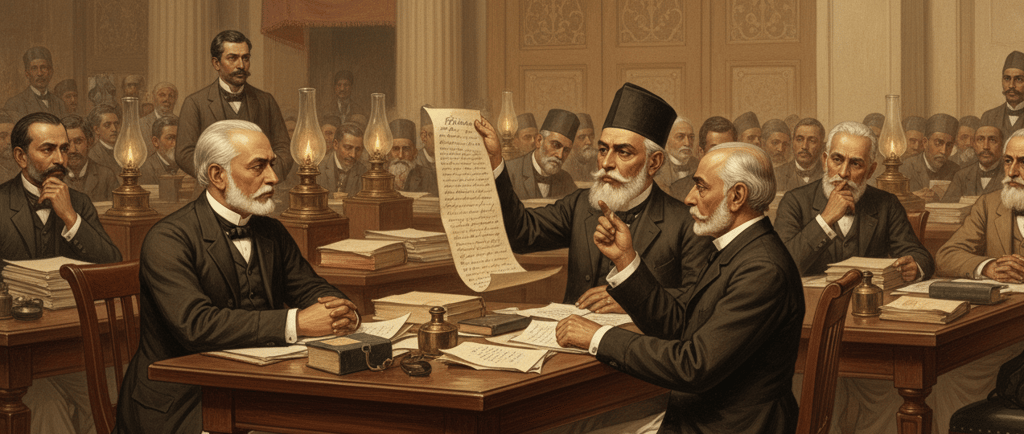
When the Indian National Congress (INC) was founded in 1885, it entered a political landscape shaped by rising intellectual consciousness, regional associations, and the first sparks of anti-colonial thinking. Although India was still firmly under British rule, a new class of Western-educated Indians had begun examining the structure of imperial power and the systemic injustices built into it.
These early nationalist thinkers, later known as the Moderates, would lay the intellectual foundation for India’s freedom struggle. Their efforts did not ignite mass uprisings, but they did something even more crucial: they created a national platform, forged an Indian political identity, and began a conversation on rights, representation, and self-governance that would eventually reshape the course of Indian history.
Foundation of the Indian National Congress: Setting the Stage for Modern Nationalism
The birth of the INC in 1885 was more than an administrative decision, it was a turning point in the political evolution of modern India. Throughout the 1870s and early 1880s, several regional associations, like the Poona Sarvajanik Sabha, Madras Mahajan Sabha, and Bombay Presidency Association had emerged across India.
These institutions nurtured political debate, trained new leaders, and articulated local grievances. Many historians argue that the INC was the natural outcome of this growing political awakening, while others emphasize the role of British administrators in facilitating early organization.
On 28 December 1885, under the initiative of A.O. Hume, a retired British civil servant, and with the support of prominent Indian leaders, the first session of the INC convened in Bombay. With this, India acquired a national political platform for the very first time, an institution that aimed to represent Indian interests before the colonial administration.
Between 1885 and 1905, this early phase of Congress was dominated by the Moderates, who believed that constitutional agitation, logical persuasion, and rational dialogue with the British Government would gradually lead to political reforms and greater autonomy for Indians.
Understanding Why the INC Was Created: Theories Behind the Foundation
Historical narratives surrounding the founding of the INC have long fascinated scholars. Two major theories attempt to explain why and how the Congress came into existence, and both offer valuable insight into the political temperament of the time.
The Safety Valve Theory: A British Strategy or a National Necessity?
To understand the Safety Valve Theory, one must step into the mindset of early nationalist leaders and British policymakers. Lala Lajpat Rai, a leading nationalist thinker, first articulated this theory in 1916. According to him, the INC was deliberately created as a “safety valve” by the British to channel the rising political frustrations of educated Indians into a controlled, non-revolutionary space.
Rai argued that:
Congress was the brainchild of Lord Dufferin, the Viceroy of India.
A.O. Hume acted as a mediator who gathered Indian leaders not to challenge British authority but to prevent potential rebellions.
The British wanted to diffuse political tension by giving Indians a platform to express grievances peacefully.
Although this theory gained immense popularity, later historians criticized it as overly simplistic. Many Indian scholars argued that Lala Lajpat Rai projected his personal ideology into this interpretation and that the theory does not capture the genuine Indian initiative involved in the formation of the INC. Still, the Safety Valve Theory remains an important perspective that helps us understand British anxieties during the period.
The Lightning Conductor Theory: A Platform to Channel Indian Aspirations
In contrast to the Safety Valve Theory, the Lightning Conductor Theory, proposed by the eminent Moderate leader Gopal Krishna Gokhale, is rooted in Indian political agency. Gokhale believed the INC acted as a "lightning conductor," a necessary institution through which the rising political energies and reformist aspirations of Indians could be guided safely and constructively.
According to Gokhale:
Indian leaders needed an organized national platform to express political aspirations.
The INC prevented the national movement from turning violent too early by channelling discontent into constitutional agitation.
It symbolized a mature, thoughtful approach to developing nationalism.
In this interpretation, the INC wasn’t a British creation, it was a strategic and essential tool crafted by Indian leaders to protect and nurture the young national movement.
Objectives of the INC During the Moderate Phase: A Vision for Political Awakening
When the INC first emerged, its goals were not radical. The early leaders were deeply influenced by Western liberalism, constitutionalism, and the belief in rational dialogue. Their objective was not to overthrow British rule but to reform it.
The Moderates aimed to develop a sense of national unity, bridging linguistic, caste, regional, and religious differences among Indians. They believed the first step toward nationhood was political education, creating awareness among Indians about their rights, and cultivating a feeling of belonging to a collective national identity.
Their emphasis lay on:
encouraging constitutional reforms
expanding political rights
ensuring greater participation of Indians in administration
nurturing democratic values in public life
organizing national discussions and petitions
This early phase of Indian nationalism was deeply anchored in the belief that peaceful, steady effort would eventually transform the colonial system and make it more responsive to Indian needs.
How the Moderates Worked: The Method of Constitutional Agitation
To understand the work methods of Moderates, we must visualize the political atmosphere of late 19th-century India. The British Empire appeared too powerful to confront directly, and most early Indian leaders were trained in Western political ideas that emphasized legality, rationality, and reform through persuasion.
Moderates, therefore, believed in constitutional agitation, a method that relied on debate, reason, and lawful expression. Their tools included petitions, resolutions, official memoranda, and public meetings, through which they sought to convince British authorities of the need for reforms.
Most founding members of the INC came from the educated middle and upper classes. They were deeply influenced by liberal Western thought and admired Britain’s parliamentary traditions. They believed that by demonstrating loyalty to the British Crown and appealing to Britain’s professed commitment to justice and fairness, India could secure reforms.
Moderate leaders such as Dadabhai Naoroji, Gopal Krishna Gokhale, Ferozeshah Mehta, and Surendranath Banerjee frequently emphasized peaceful agitation. They even used the press as a powerful instrument, writing extensively in newspapers to expose injustices and educate the public about political issues.
Their approach was slow and cautious, but it created the intellectual backbone of Indian nationalism.
Demands of the Moderates: Reimagining India’s Political and Economic Future
The political demands raised by the Moderates were not sudden or radical; they emerged gradually as leaders studied the structural problems of British rule. Central to their aspirations was the idea that India could progress only if it had greater control over its own affairs.
Moderates often declared in public meetings that Indians were subjects of the Crown, but not slaves of the Empire. In their early speeches, they used the term Swaraj, a word that lacked a precise definition at the time but symbolized a desire for more autonomy. Over time, Swaraj evolved to mean Dominion Status, similar to self-governing colonies like Canada.
Their major political demands included greater Indian representation in law-making bodies, especially:
The Indian Council in London, where policies affecting India were shaped
The Viceroy’s Executive Council, which steered administration in India
Economically, Moderates were deeply concerned about the Drain of Wealth, a concept famously articulated by Dadabhai Naoroji. They argued that British economic policies were impoverishing India by sending enormous sums abroad.
To combat this, they demanded:
Financial control in India
Prohibition of taxation without representation
Reduction of military expenditure
Encouragement of Indian industries
Moderates also championed industrialization, insisting that India’s economic backwardness stemmed from colonial policies that favored Britain at India’s expense. Leaders like R.C. Dutt and Naoroji pressed for capital development, infrastructure expansion, and industrial growth.
They advocated Indianization of Civil Services, demanding that examinations be held in both India and England so more Indians could participate. They also called for the separation of the judiciary from the executive, believing it would usher in fairness and reduce administrative corruption.
The Moderates’ demands were thus a blueprint for political democratization and economic revival—an early vision of what a modern Indian state ought to be.
Also Read: The Rise of Indian Nationalism: A Detailed Historical Exploration
Achievements of the Moderates: Building the Foundations of Nationalism
The legacy of the Moderates cannot be measured solely by the number of reforms they secured. Their true achievement lies in the vast political awakening they nurtured across India. They introduced Indians to the principles of democracy, accountability, and constitutional rights, and they educated the public about British exploitation.
The Moderates were instrumental in:
exposing the economic harm caused by colonial rule
encouraging public participation in political debates
advocating for industrialization and public expenditure reforms
securing the Indian Councils Act of 1892, which allowed limited representation and increased budget discussion
Their persistent efforts led to the establishment of the Public Service Commission, a step toward professionalizing the civil services.
The Moderates also paved the way for the demand for Swaraj. By 1906, the idea of Swaraj had taken a more concrete shape, and many acknowledged that the ideological groundwork for this was laid by the Moderates during the early phase of Congress.
Their work also pushed the British to set up the Welby Commission to investigate India's financial condition, a clear sign that the British could no longer ignore Indian voices.
More importantly, the Moderates prepared the foundation for the rise of the Extremists and the subsequent Swadeshi Movement, which would radically transform the nationalist struggle.
Limitations of the Moderates: Why Their Influence Eventually Declined
Despite their achievements, the Moderates faced several limitations that eventually led to their decline. Their unwavering faith in British justice often proved unrealistic. They believed that the British would voluntarily grant reforms if convinced by logical arguments, a belief that failed to match the increasingly exploitative nature of colonial policies.
Moderates also struggled to mobilize the masses. Their movement remained largely confined to the educated elite, leaving workers, peasants, and the wider population untouched by their politics. At a time when nationalism needed to expand beyond drawing-room discussions, the Moderates’ cautious approach felt inadequate.
Their demand for Swaraj lacked clarity during the early years, and their constitutional methods were slow. Many younger leaders viewed them as too soft, too trusting, and too dependent on British goodwill.
By the early 20th century, a new generation of nationalists: Bal Gangadhar Tilak, Bipin Chandra Pal, and Lala Lajpat Rai began challenging the Moderate approach, leading to ideological rifts within the Congress.
Yet, despite these limitations, the Moderates played a crucial role in shaping Indian nationalism. Without their early organization, political education, and intellectual leadership, the later mass movements of the 20th century would not have found such a solid foundation.
Conclusion: Why the Moderate Phase Matters in Indian History
The Moderate Phase (1885–1905) stands as the intellectual and organizational bedrock of India’s freedom struggle. While they did not demand complete independence or lead mass uprisings, their contribution lies in something more enduring: they created the first national platform, articulated India’s political and economic grievances, nurtured democratic ideals, and educated an entire generation about the injustices of colonial rule.
By the time the Moderates stepped aside for more assertive nationalists, India was no longer just a geographical entity, it was a politically conscious nation ready to fight for its future.
References:
From Plassey to Partition and After: A History of Modern India – Sekhar Bandyopadhyay
India’s Struggle for Independence – Bipan Chandra
A New Look at Modern Indian History – B.L. Grover & Mehta Alka
FAQs
Q1. Who are the five moderate leaders?
The five well-known Moderate leaders of the early Indian National Congress were Dadabhai Naoroji, Gopal Krishna Gokhale, Surendranath Banerjee, Ferozeshah Mehta, and R.C. Dutt. These leaders represented the first generation of organized political nationalism in India. They believed in gradual reforms, constitutional methods, reasoned arguments, and peaceful dialogue with the British government. Their leadership between 1885 and 1905 laid the intellectual and organizational foundations for India’s national movement.
Q2. Who are Moderates and radicals?
Moderates were the early leaders of the Indian National Congress (1885–1905) who believed in peaceful, constitutional methods such as petitions, speeches, and negotiations to secure political reforms. They emphasized dialogue and loyalty to the British Crown, hoping the British would eventually act justly. Radicals (also called Extremists) emerged later and rejected the Moderates’ slow approach. Leaders like Bal Gangadhar Tilak, Lala Lajpat Rai, and Bipin Chandra Pal believed in assertive nationalism, mass mobilization, swadeshi, boycott, and stronger resistance against colonial rule.
Q3. Is Dadabhai Naoroji a moderate?
Yes, Dadabhai Naoroji is one of the most prominent Moderate leaders in Indian history. Known as the “Grand Old Man of India,” he was central to shaping the early ideology of the INC. His Drain of Wealth Theory, speeches in the British Parliament, and persistent advocacy for Indian representation made him the intellectual backbone of the Moderate Phase. He also served as INC President thrice and was one of the first to articulate the concept of Swaraj.
Q4. Who is the father of Moderates?
Gopal Krishna Gokhale is often regarded as the “Father of the Moderates” because he refined the philosophy of constitutional agitation, advised younger leaders, and gave the Moderate ideology a structured political direction. Through the Servants of India Society and his work in the Imperial Legislative Council, Gokhale shaped Moderate thinking on education, economic reform, and responsible governance. Some historians also consider Dadabhai Naoroji a founding pillar of the Moderates, but Gokhale is most commonly given this title.
Q5. Who were the Moderates in Indian history?
The Moderates were the first generation of national leaders associated with the Indian National Congress from 1885 to 1905. They were mostly Western-educated professionals, lawyers, economists, journalists, who believed in peaceful constitutional reforms rather than confrontation. Their politics emphasized petitions, debates, and logical criticism of British economic policies. Leaders such as Dadabhai Naoroji, Gokhale, Surendranath Banerjee, and Ferozeshah Mehta worked to cultivate national consciousness and laid the foundation for later mass movements.
Q6. Who are Moderates and extremists?
Moderates (1885–1905) worked through peaceful persuasion, trusted British liberal traditions, and believed reforms could be achieved by appealing to British conscience. In contrast, Extremists (1905-1917) emerged as a response to British repression and the limitations of Moderate politics. Extremists demanded Swaraj more boldly, encouraged mass participation, and used methods like boycott, swadeshi, strikes, and public mobilization. Together, these two groups represent the two phases of early Indian nationalism before Gandhi unified the movement.