What Is the Story Behind Holi? History, Prahlad-Holika Legend & Why Holi Is Celebrated
What is the story behind Holi? Learn the history of Holi, the Prahlad and Holika legend, and why this vibrant festival of colors is celebrated in India.
MYTHOLOGY & ANCIENT STORIESINDIAN FESTIVALS
S. K. Sinha
3/6/20265 min read
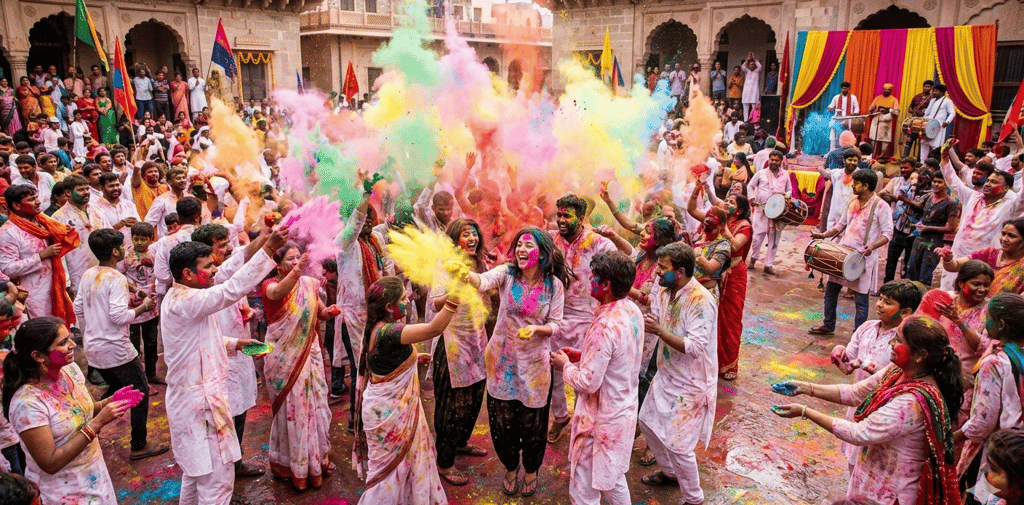
Every year, as winter fades and spring begins to bloom across the Indian subcontinent, millions of people celebrate one of the most vibrant festivals in the world - Holi. Known as the Festival of Colours, Holi is associated with joy, community gatherings, sweets, music, and playful celebrations with coloured powders.
However, beyond the colours and celebrations lies a rich cultural and mythological history. Many people often ask why holi is celebrated, or what is the story behind holi festival. The answer combines Hindu mythology, seasonal agricultural traditions, and centuries-old cultural practices recorded in ancient texts.
This blog explores what is the story behind holi, the mythology of Prahlad and Holika, the tradition of Holika Dahan, and why do we celebrate holi with colours, supported by reliable historical and textual references.
What Is the Story Behind Holi Festival?
The most widely known explanation for holi festival why is it celebrated comes from the legend of Prahlad described in ancient Hindu texts such as the Bhagavata Purana and the Vishnu Purana.
These texts narrate the story of a young devotee named Prahlad who remained devoted to Lord Vishnu despite severe persecution by his father, the demon king Hiranyakashipu. According to scholars of Hindu mythology, the story represents faith, devotion, and the victory of good over evil.
You can read about this mythological narrative in the Bhagavata Purana (Book 7), which describes the conflict between Hiranyakashipu and Prahlad and how devotion ultimately triumphed over tyranny.
This mythological story forms the foundation for the festival of Holi and especially the ritual known as Holika Dahan.
The Story of Prahlad and Holika
To understand the story of prahlad and holika, we need to look at Hindu mythology described in the Puranas.
According to the Bhagavata Purana, Hiranyakashipu was a powerful demon king who gained a boon from Lord Brahma that made him extremely difficult to defeat. Because of this boon, he became arrogant and ordered everyone in his kingdom to worship him as a god.
However, his own son Prahlad refused to obey him. Prahlad remained a devoted follower of Lord Vishnu, which angered Hiranyakashipu greatly.
The king made several attempts to kill Prahlad, but each attempt failed. According to the Purana, Prahlad survived poison, snake attacks, and other dangers because of his unwavering devotion.
Finally, Hiranyakashipu sought help from his sister Holika, who possessed a magical garment that protected her from fire.
Holika sat on a burning pyre with Prahlad in her lap, expecting the boy to burn while she remained safe. However, according to the legend, Prahlad’s faith protected him while Holika’s protection failed. Holika burned in the flames while Prahlad survived unharmed.
This event symbolized the triumph of good over evil, and it became one of the central explanations for reason why we celebrate holi.
What Is the Story Behind Holika Dahan?
The ritual performed on the evening before Holi is called Holika Dahan, a ceremonial bonfire that commemorates the burning of Holika.
This explains what is the story behind holika dahan.
During this ritual:
Communities gather around a bonfire.
Ritual prayers are offered.
The fire symbolizes the destruction of evil and negativity.
Holika Dahan usually takes place on the full moon night (Purnima) of the Hindu month of Phalguna, according to the Hindu lunar calendar.
Scholars also note that fire rituals marking seasonal transitions existed in ancient agricultural societies. Such ceremonies symbolized purification, protection, and the end of winter.
You can read about the historical and cultural significance of Holika Dahan in cultural research on Indian festivals published by Britannica.
Why Do We Celebrate Holi With Colours?
While Holika Dahan marks the mythological aspect of the festival, the next day is known as Rangwali Holi, when people celebrate with colours.
This raises a common question: why do we celebrate holi with colours?
Historians and cultural scholars suggest two main explanations.
Celebration of Spring
Holi marks the arrival of spring, a season associated with blooming flowers, agricultural renewal, and new beginnings. Traditionally, the colours used in Holi were made from natural sources such as:
Turmeric
Neem
Flowers of the Palash tree (Butea monosperma)
These natural colours symbolized fertility, vitality, and the beauty of nature.
Social and Cultural Celebration
Over centuries, Holi evolved into a social festival where people celebrate together regardless of social status.
Traditionally, Holi celebrations include:
Applying colours to friends and family
Singing traditional songs
Sharing festive sweets such as gujiya
Visiting neighbours and relatives
Because of these traditions, Holi has also become a festival that promotes community harmony and social bonding.
Reason Why We Celebrate Holi
The deeper reason why we celebrate holi combines mythology, seasonal celebration, and cultural tradition.
From a cultural and historical perspective, Holi represents three important themes:
1. Victory of Good Over Evil
The story of Prahlad and Holika symbolizes the triumph of faith and righteousness over arrogance and cruelty.
2. Celebration of Spring
Holi marks the transition from winter to spring, a period historically associated with agricultural renewal and prosperity.
3. Social Harmony
Holi encourages people to forget conflicts, rebuild relationships, and celebrate together.
Historical references to spring festivals similar to Holi appear in ancient Sanskrit literature. One notable example is Ratnavali, a 7th-century Sanskrit play written by King Harsha, which describes people celebrating a spring festival with coloured powders and joyful gatherings.
Scholars studying ancient Indian festivals mention such references in works like Axel Michaels’ book “Hinduism: Past and Present.”
What Is the Story Behind Holi? A Festival with Deep Cultural Roots
Understanding what is the story behind holi festival shows that the celebration is much more than a colourful event.
It combines mythology, seasonal change, and centuries of cultural tradition. The legend of Prahlad teaches the importance of faith and devotion. Holika Dahan reminds people of the destruction of evil forces. The playful colours represent the joy and renewal that come with spring.
Today, Holi is celebrated not only across India but also in many parts of the world where Indian communities live. From villages to large cities and even international festivals, the celebration continues to carry its original message, joy, unity, and the victory of good over evil.
For those wondering why holi is celebrated, the answer lies in this powerful combination of mythology, history, and cultural tradition that has shaped one of India’s most beloved festivals.
FAQ
Q. Why holi is celebrated?
Holi is celebrated to mark the victory of good over evil. According to Hindu mythology, the festival commemorates the story of Prahlad, a devotee of Lord Vishnu, who survived the attempt of the demoness Holika to burn him. The festival also celebrates the arrival of spring.
Q. What is the story behind holi festival?
The most widely known explanation of Holi comes from the legend of Prahlad and Holika mentioned in the Bhagavata Purana. Prahlad’s devotion to Lord Vishnu protected him from a fire arranged by his father Hiranyakashipu and aunt Holika, symbolizing the triumph of righteousness.
Q. What is the story behind holika dahan?
Holika Dahan represents the burning of Holika in the mythological story of Prahlad. The ritual bonfire symbolizes the destruction of evil and the protection of devotion and faith.
Q. Why do we celebrate holi with colours?
The celebration with colours marks the arrival of spring and joy after winter. Traditionally, natural colours made from flowers and herbs were used, symbolizing renewal, happiness, and community bonding.
Q. What is the reason why we celebrate holi?
The main reason why we celebrate Holi is to commemorate the victory of good over evil, welcome the spring season, and strengthen social harmony by bringing communities together in celebration.
Also Read: Maharaja Prithu of Assam: The Warrior-King Who Shielded Kamarupa From Invasion
Banner Image Source: Gemini